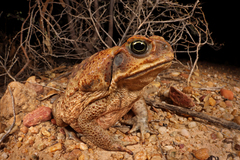
About this species
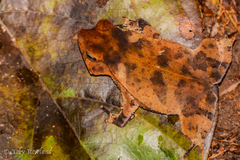
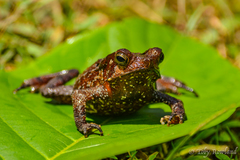
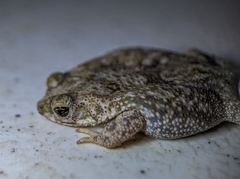
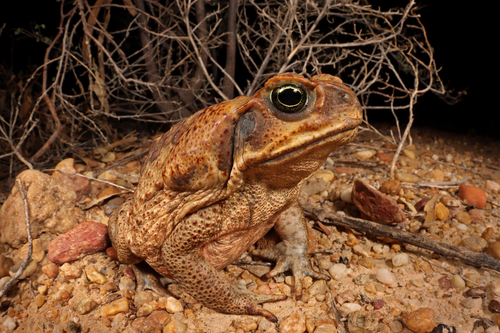
The cane toad (Rhinella marina), also known as the giant neotropical toad or marine toad, is a large, terrestrial true toad native to South and mainland Central America, but which has been introduced to various islands throughout Oceania and the Caribbean, as well as Northern Australia. It is a member of the genus Rhinella, which includes many true toad species found throughout Central and South America, but it was formerly assigned to the genus Bufo.
A fossil toad (specimen UCMP 41159) from the La Venta fauna of the late Miocene in Colombia is morphologically indistinguishable from modern cane toads from northern South America. It was discovered in a floodplain deposit, which suggests the R. marina habitat preferences have long been for open areas. The cane toad is a prolific breeder; females lay single-clump spawns with thousands of eggs. Its reproductive success is partly because of opportunistic feeding: it has a diet, unusual among anurans, of both dead and living matter.
Read more on Wikipedia · Text: Wikipedia, CC BY-SA 4.0
El sapo gigante o sapo de caña (Rhinella marina), también conocido como sapo neotropical gigante o sapo marino, es una especie de anfibio anuro de la familia Bufonidae.
Este anfibio tiene grandes glándulas venenosas; los adultos y renacuajos al ser ingeridos son altamente tóxicos para la mayoría de los animales. El sapo de caña es grande y terrestre, mide en promedio de 10 a 15 cm; el espécimen más grande registrado pesó 2,65 kg y alcanzó 38 cm de hocico a cloaca y 54 cm totalmente extendido.
Su piel seca y verrugosa tiene distintas protuberancias que comienzan encima de los ojos y terminan en el hocico. Puede ser gris, marrón, rojo-marrón u oliva. Con gran glándula parotoide detrás de cada ojo. Vientre color crema y a veces manchas en sombras de negro o marrón. Pupilas horizontales con iris dorado. Dedos del pie con membranas carnosas en su base, los dedos de la mano son libres. Este sapo es miembro del género Rhinella con decenas de especies de sapos en diferentes hábitats en América.
Seguir leyendo en Wikipedia · Texto: Wikipedia, CC BY-SA 4.0
海蟾蜍(学名:Bufo marinus),又名美洲巨蟾蜍、甘蔗蟾蜍、蔗蟾蜍或蔗蟾,是原产于中美洲及南美洲一种热带地区陆生的蟾蜍,是全世界最大蟾蜍,后来被引入澳洲,广泛的分布在澳洲大陆的东海岸和北部地区。牠们的繁殖能力很强,一次就可以产达几千颗卵。成体长10-15厘米;纪录最大的标本重达2.65公斤及长24厘米。
海蟾蜍有毒腺,蝌蚪对于大部份动物也是有具有剧毒的。牠们被引入到多个国家来控制害虫,不过由于没有天敌反而成为了害虫及入侵物种。国际自然保护联盟物种存续委员会的入侵物种专家小组(ISSG)列为世界百大外来入侵种。
在维基百科上阅读更多 · 文字:维基百科,CC BY-SA 4.0
Classification
| Kingdom | Animalia |
|---|---|
| Phylum | Chordata |
| Class | Amphibia |
| Order | Anura |
| Family | Bufonidae |
| Genus | Rhinella |
In Suriname
Where it has been recorded
- Sipaliwini172
- Brokopondo68
- Paramaribo68
- Commewijne31
- Para23
- Nickerie10
- Marowijne6
- Wanica5
- Saramacca4
- Coronie2
Districts with at least one record that has coordinates. Shaded districts have records.
Records by month
All years combined.