Common soapwort
Saponaria officinalis L.
Names
| English | Common soapwort |
|---|---|
| Dutch | Zeepkruid |
| Spanish | Herbada |
| Chinese | 肥皂草 |
| Scientific name | Saponaria officinalis L. |
About this species
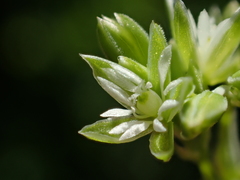
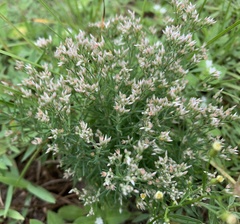
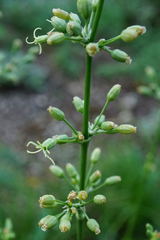
Saponaria officinalis is a common perennial plant from the family Caryophyllaceae. This plant has many common names, including common soapwort, bouncing-bet, crow soap, and soapweed. There are about 20 species of soapworts altogether.
The scientific name Saponaria is derived from the Latin sapo (stem sapon-) meaning "soap", which, like its common name, refers to its utility in cleaning. From this same Latin root is derived the name of the toxic substances saponins found in many plants, including a specific saporin saponarin contained in the roots at levels up to 20 percent when the plant is flowering (Indian soapnuts contain only 15 percent). The flowers colouring likely reflects the chemical environment of saponarin. Saponins produce a lather when in contact with water. The epithet officinalis indicates its medicinal functions. It is a common host plant for some moth species, including the white-lined sphinx.
Saponaria officinalis' native range extends throughout Europe, and in Asia to western Siberia.
Read more on Wikipedia · Text: Wikipedia, CC BY-SA 4.0
Saponaria officinalis, llamada comúnmente jabonera o saponaria, es una especie de planta con flores perteneciente a la familia Caryophyllaceae.
Seguir leyendo en Wikipedia · Texto: Wikipedia, CC BY-SA 4.0
肥皂草(学名:Saponaria officinalis)为石竹科肥皂草属的一种草本植物,广泛分布于欧亚大陆。
肥皂草在地中海沿岸有野生,我国北方栽培较多,在部分地区已逸生。开花时,其根中的皂素含量可达20%。
在维基百科上阅读更多 · 文字:维基百科,CC BY-SA 4.0
Classification
| Kingdom | Plantae |
|---|---|
| Phylum | Tracheophyta |
| Class | Magnoliopsida |
| Order | Caryophyllales |
| Family | Caryophyllaceae |
| Genus | Saponaria |
In Suriname
Where it has been recorded
- Paramaribo1
Districts with at least one record that has coordinates. Shaded districts have records.