Daggernose Shark
Isogomphodon oxyrhynchus (Müller & Henle, 1839)
Names
| English | Daggernose Shark |
|---|---|
| Dutch | Dolkneushaai |
| Spanish | Tiburón nariz de daga |
| Chinese | 剑吻鲨 |
| Scientific name | Isogomphodon oxyrhynchus (Müller & Henle, 1839) |
About this species
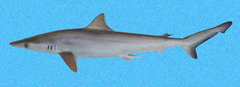
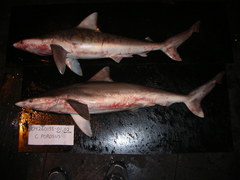
The daggernose shark (Carcharhinus oxyrhynchus) is a little-known species of requiem shark, in the family Carcharhinidae. It inhabits shallow tropical waters off northeastern South America, from Trinidad to northern Brazil, favoring muddy habitats such as mangroves, estuaries, and river mouths, though it is intolerant of fresh water. A relatively small shark typically reaching 1.5 m (4.9 ft) in length, the daggernose shark is unmistakable for its elongated, flattened, and pointed snout, tiny eyes, and large paddle-shaped pectoral fins.
Daggernose sharks are predators of small schooling fishes. Its reproduction is viviparous, with females giving birth to 2–8 pups every other year during the rainy season; this species is capable of shifting the timing of its reproductive cycle by several months in response to the environment. Harmless to humans, the daggernose shark is caught for food and as bycatch in artisanal and commercial fisheries.
Read more on Wikipedia · Text: Wikipedia, CC BY-SA 4.0
El tiburón nariz de daga (Carcharhinus oxyrhynchus) es una especie de pez carcariniforme de la familia Carcharhinidae. Habita aguas tropicales poco profundas frente a la costa noreste de Sudamérica, desde Trinidad hasta el norte de Brasil, prefiriendo hábitats fangosos como manglares, estuarios y desembocaduras de ríos, aunque no tolera el agua dulce. Es un tiburón relativamente pequeño que suele alcanzar 1,5 metros de longitud, el tiburón nariz de daga es inconfundible por su hocico alargado, aplanado y puntiagudo, ojos diminutos y grandes aletas pectorales en forma de pala .
Los tiburones nariz de daga son depredadores de pequeños peces que forman cardúmenes. Su reproducción es vivípara, donde las hembras dan a luz de 2 a 8 crías cada dos años durante la temporada de lluvias, esta especie es capaz de modificar el momento de su ciclo reproductivo en varios meses en respuesta al medio ambiente. Inofensivo para los humanos, el tiburón nariz de daga se captura para consumo y como captura incidental en la pesca artesanal y comercial.
Seguir leyendo en Wikipedia · Texto: Wikipedia, CC BY-SA 4.0
Classification
| Kingdom | Animalia |
|---|---|
| Phylum | Chordata |
| Class | Elasmobranchii |
| Order | Carcharhiniformes |
| Family | Carcharhinidae |
| Genus | Isogomphodon |
In Suriname
Where it has been recorded
- Paramaribo1
Districts with at least one record that has coordinates. Shaded districts have records.