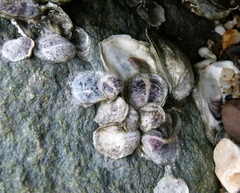
Eastern Oyster
Crassostrea virginica (Gmelin, 1791)
Names
| English | Eastern Oyster |
|---|---|
| Dutch | Amerikaanse oester |
| Spanish | Ostión del Altántico |
| Chinese | 美洲巨蛎 |
| Scientific name | Crassostrea virginica (Gmelin, 1791) |
About this species
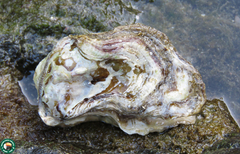
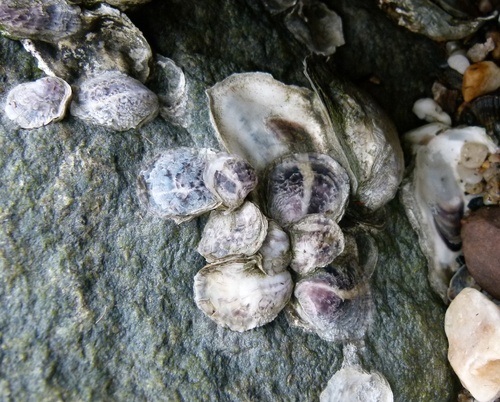
The eastern oyster (Crassostrea virginica)—also called the Atlantic oyster, American oyster, or East Coast oyster—is a species of true oyster native to eastern North and South America. Other names in local or culinary use include the Wellfleet oyster, Virginia oyster, Malpeque oyster, Blue Point oyster, Chesapeake Bay oyster, and Apalachicola oyster. C. virginica ranges from northern New Brunswick south through parts of the West Indies to Venezuela. It is farmed in all of the Maritime provinces of Canada and all Eastern Seaboard and Gulf states of the United States, as well as Puget Sound, Washington, where it is known as the Totten Inlet Virginica. It was introduced to the Hawaiian Islands in the 19th century and is common in Pearl Harbor.
The eastern oyster is an important commercial species. Its distribution has been affected by habitat change; less than 1% of the population present when the first European colonists arrived is thought to remain in the Chesapeake Bay and its tributaries.
Read more on Wikipedia · Text: Wikipedia, CC BY-SA 4.0
El ostión de Virginia (Crassostrea virginica) pertenece a la clase Bivalvia de moluscos. Viven exclusivamente en medio acuático, con una forma corporal de simetría bilateral, comprimida lateralmente y una concha de dos valvas (bivalva) que, en general, es bastante grande para admitir al animal completo.
El sistema circulatorio está formado por un corazón con dos aurículas. El sistema nervioso carece de particularidad alguna (ganglionar). La respiración es branquial. La cabeza es reducida hasta la parte branquial, faltando la región faríngea y la rádula. En general se alimentan filtrando agua. Los bivalvos son animales predominantemente de sexos separados, rara vez hermafroditas. La fecundación tiene lugar de manera libre en el agua o bien en la cavidad del manto.
Seguir leyendo en Wikipedia · Texto: Wikipedia, CC BY-SA 4.0
美洲牡蛎(又译作美东牡蛎,学名:Crassostrea virginica),原生于美洲东部,属于巨牡蛎属(学名:Crassostrea)。其分布范围从加拿大新不伦瑞克省北部起,向南经过西印度群岛的部分地区,一直延伸至委内瑞拉。美洲牡蛎也被人工养殖于加拿大海洋省份、美国东岸各州和墨西哥湾沿岸州。在美国华盛顿州普吉特海湾养殖的美洲牡蛎被称为托顿维珍尼亚生蚝(Totten Inlet Virginica)。19世纪,美洲牡蛎被引入夏威夷群岛,目前常见于珍珠港。
美洲牡蛎是重要的经济物种,然而,它们已受到栖息地变化的严重影响。据估计,切萨皮克湾及其支流中现存的美洲牡蛎种群数量已不及欧洲殖民者初次抵达时的1%。目前,美洲牡蛎的种群数量正受过度捕捞和水污染的威胁。2014年,经自然服务股份有限公司评估,美洲牡蛎的全球保护等级被调整为“易危”。此外,美洲牡蛎面临的其他威胁还包括全球变暖、疾病、寄生虫,以及入侵物种的竞争。
在维基百科上阅读更多 · 文字:维基百科,CC BY-SA 4.0
Classification
| Kingdom | Animalia |
|---|---|
| Phylum | Mollusca |
| Class | Bivalvia |
| Order | Ostreida |
| Family | Ostreidae |
| Genus | Crassostrea |