Holy Basil
Ocimum tenuiflorum L.
Names
| English | Holy Basil |
|---|---|
| Dutch | — |
| Spanish | Albahaca |
| Chinese | 圣罗勒 |
| Scientific name | Ocimum tenuiflorum L. |
About this species
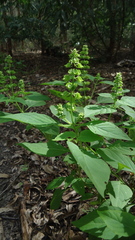
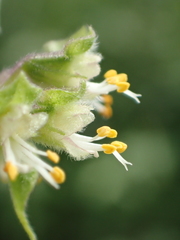
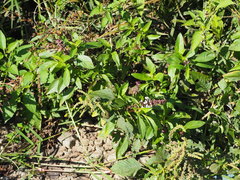
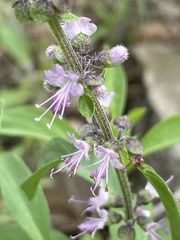
Ocimum tenuiflorum, commonly known as tulasi, tulsi, or holy basil, is an aromatic perennial plant in the family Lamiaceae. It is widely cultivated throughout the Southeast Asian tropics. It is native to tropical and subtropical regions of Asia, Australia and the western Pacific. This plant has escaped from cultivation and has naturalized in many tropical regions of the Americas. It is an agricultural and environmental weed.
Tulasi is cultivated for religious and traditional medicine purposes, and also for its essential oil. It is widely used as an herbal tea, commonly used in Ayurveda. It has a place within the Vaishnava tradition of Hinduism, in which devotees perform worship involving the plant or its leaves.
Read more on Wikipedia · Text: Wikipedia, CC BY-SA 4.0
Ocimum tenuiflorum, nombre común tulsí, es una planta aromática de la familia de las lamiáceas, considerada sagrada por el hinduismo. Es pariente cercana de la albahaca común Ocimum basilicum. En Filipinas se llama balánoy.
Seguir leyendo en Wikipedia · Texto: Wikipedia, CC BY-SA 4.0
圣罗勒(学名:Ocimum tenuiflorum),又名神罗勒、打抛叶、打抛或嘎抛(泰语:กะเพรา,kaphrao),为唇形科罗勒属下的一种多年生草本植物,原生于印度次大陆,其相关栽植种遍及东南亚和热带地区。
在维基百科上阅读更多 · 文字:维基百科,CC BY-SA 4.0
Classification
| Kingdom | Plantae |
|---|---|
| Phylum | Tracheophyta |
| Class | Magnoliopsida |
| Order | Lamiales |
| Family | Lamiaceae |
| Genus | Ocimum |
In Suriname
Where it has been recorded
- Paramaribo3
- Wanica1
Districts with at least one record that has coordinates. Shaded districts have records.