Hoof Fungus
Fomes fomentarius (L.) Fr.
Names
| English | Hoof Fungus |
|---|---|
| Dutch | Echte tonderzwam |
| Spanish | Hongo agarico Yesca |
| Chinese | 木蹄层孔菌 |
| Sranan Tongo | popolipo (general name for the group) |
| Scientific name | Fomes fomentarius (L.) Fr. |
About this species
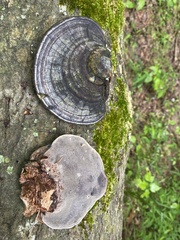
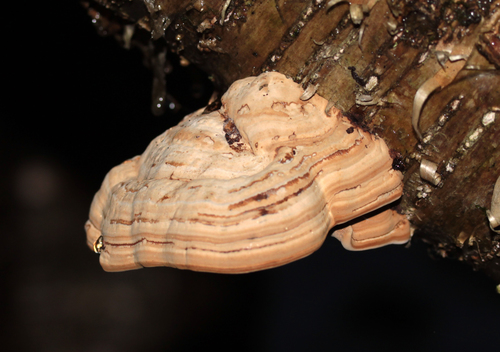
Fomes fomentarius (commonly known as the tinder fungus, false tinder fungus, hoof fungus, tinder conk, tinder polypore or ice man fungus) is a perennial wood-decay basidiomycete found in Europe, Asia, Africa and North America. The species produces large, hoof-shaped polypore fruit bodies which vary in colour from silvery grey to almost black, though they are normally brown. It develops on the trunks of various hardwood species and is associated with the development of white rot in the underlying wood. It has traditionally been described as a plant pathogen, but experimental studies have also reported its occurrence as a latent stem endophyte within apparently healthy trees.
Though inedible, F. fomentarius has traditionally seen use as the main ingredient of amadou, a material used primarily as tinder, but also used to make clothing and other items. The 5,000-year-old Ötzi carried four pieces of F. fomentarius, supposedly for tinder.
Read more on Wikipedia · Text: Wikipedia, CC BY-SA 4.0
Fomes fomentarius (nombre común hongo yesca, hongo yesquero u hongo pata de caballo) es una especie de hongo parásito de plantas que se encuentra en Europa, Asia, África y América del Norte. La especie produce cuerpos fructíferos poliporos de grandes dimensiones que poseen la forma de un casco de caballo y cuya coloración varía del gris claro al casi negro, aunque por lo general son marrones. Crece sobre diversas especies de árboles, a los cuales infecta a través de lastimaduras de la corteza, causando decaimiento de la madera y podredumbre. La especie por lo general continúa viviendo sobre los árboles mucho tiempo después que los mismos han muerto, cambiando de ser un parásito a ser un descomponedor.
Si bien es comestible, tradicionalmente F. fomentarius ha sido considerado el principal ingrediente de amadou, un material utilizado sobre todo como yesca, aunque también se lo emplea para confeccionar ropa y otros elementos. Ötzi, el llamado «hombre de hielo», de 5300 años de antigüedad, llevaba consigo cuatro trozos de F. fomentarius, que se cree que usaba como yesca.
Seguir leyendo en Wikipedia · Texto: Wikipedia, CC BY-SA 4.0
木蹄层孔菌(学名:Fomes fomentarius)是一种多孔菌目真菌。它们生长在北美洲及欧洲的桦木属及水青冈属。单一颗树上就可以有多个子实体。
木蹄层孔菌并不能食用,由于其担子果可以阴燃几个小时,故可以用来点火。木蹄层孔菌的点燃能力是由古游牧民族发现。从木蹄层孔菌的紫色菌髓层可以提炼出火绒。
在维基百科上阅读更多 · 文字:维基百科,CC BY-SA 4.0
Classification
| Kingdom | Fungi |
|---|---|
| Phylum | Basidiomycota |
| Class | Agaricomycetes |
| Order | Polyporales |
| Family | Polyporaceae |
| Genus | Fomes |