Humpback Whale
Megaptera novaeangliae (Borowski, 1781)
Names
| English | Humpback Whale |
|---|---|
| Dutch | Bultrug |
| Spanish | Ballena jorobada |
| Chinese | 大翅鲸 |
| Scientific name | Megaptera novaeangliae (Borowski, 1781) |
About this species
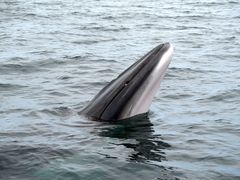
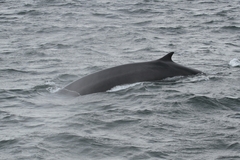
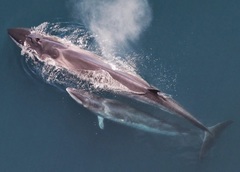
The humpback whale (Megaptera novaeangliae) is a species of baleen whale. It is a rorqual (a member of the family Balaenopteridae) and is the only species in the genus Megaptera. Adults range in length from 14–17 m (46–56 ft) and weigh up to 40 metric tons (44 short tons). The humpback has a distinctive body shape, with long pectoral fins and tubercles on its head. It is known for breaching and other distinctive surface behaviors, making it popular with whale watchers. Males produce a complex song that typically lasts from 4 to 33 minutes.
Found in oceans and seas around the world, humpback whales typically migrate between feeding areas towards the poles and breeding areas near the equator. Their diet consists mostly of krill and small fish, and they usually use bubbles to catch prey. They are polygynandrous breeders, with both sexes having multiple partners. Males will follow females and fight off rivals. Mothers give birth to calves in shallower water. Orcas are the main natural predators of humpback whales. The bodies of humpbacks host barnacles and whale lice.
Read more on Wikipedia · Text: Wikipedia, CC BY-SA 4.0
La ballena jorobada (Megaptera novaeangliae), también llamada ballena yubarta, es una especie de cetáceo misticeto de la familia Balaenopteridae. Es una de las ballenas más grandes, los adultos tienen una longitud de 12 a 16 m y un peso aproximado de 36.000 kg. La especie posee una forma corporal distintiva, con aletas pectorales largas y cabeza nudosa. Es un animal acrobático que con frecuencia se impulsa sobre la superficie para luego golpear el agua. Los machos emiten un canto complejo, el cual dura de diez a veinte minutos y se repite por horas cada vez. El propósito del canto no es claro. Sin embargo, parece desempeñar una función en el apareamiento.
Se distribuye por todos los océanos y mares del mundo; normalmente migran hasta 25 000 km cada año. Las yubartas se alimentan solamente durante el verano en las regiones polares y migran a aguas tropicales y subtropicales para reproducirse y parir las crías durante el invierno polar. Mientras trascurre el invierno ayunan y subsisten gracias a su reserva de grasa.
Seguir leyendo en Wikipedia · Texto: Wikipedia, CC BY-SA 4.0
座头鲸(学名:Megaptera novaeangliae,意为大翅鲸,英语:Humpback whale意为驼背鲸)又名巨臂鲸,于须鲸小目的海洋哺乳动物。其中文名源于日文“座头”(ザトウ,日本江户时期的视障人士之社会阶级),因其背鳍及背瘤的外貌好似背负琵琶的盲人琵琶法师而得名。大翅鲸为大型须鲸,胸鳍特别的长,约占身体的三分之一。 成年鲸身长可达约11.5至16米之间(39至52英尺),少数大个体雌鲸体长可超过18米,成年雄鲸平均体长13-14米,成年雌鲸体长可达14-15米; 刚出生的仔鲸长约3至6米。。成年鲸体重25至40公吨,最重可达60公吨,新生仔鲸重1至2公吨。座头鲸以其跃出水面姿势、超长的胸鳍与成年雄鲸复杂的叫声而闻名。世界各大洋都有座头鲸的踪迹,是赏鲸者的最爱之一。
属名来自希腊文“μεγα-πτερα”,意思是“大型的翅膀”,形容座头鲸极大的胸鳍。一般认定有关座头鲸最早的文献纪录出现在法国动物学家马蒂兰·雅克·布里松的著作《Regnum Animale in Classes IX Distributum》,该著作对座头鲸的称呼“baleine de la Nouvelle Angleterre”与座头鲸的种小名“novaeangliae”都代表“来自新英格兰的”,可能是因为早期在该地区有许多座头鲸的目击纪录。
在维基百科上阅读更多 · 文字:维基百科,CC BY-SA 4.0
Classification
| Kingdom | Animalia |
|---|---|
| Phylum | Chordata |
| Class | Mammalia |
| Order | Cetacea |
| Family | Balaenopteridae |
| Genus | Megaptera |