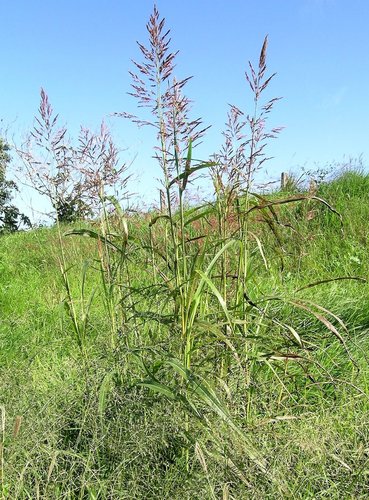
Johnson grass
Sorghum halepense (L.) Pers.
Names
| English | Johnson grass |
|---|---|
| Dutch | Wilde sorgo |
| Spanish | Alpiste africano |
| Chinese | 石茅 |
| Scientific name | Sorghum halepense (L.) Pers. |
About this species
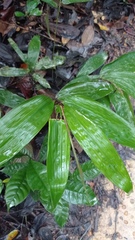
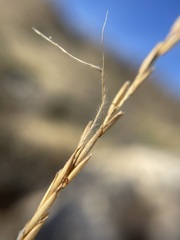
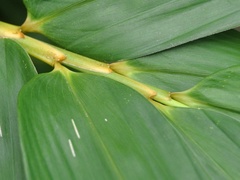
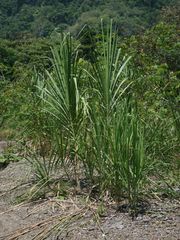
Johnson grass or Johnsongrass, Sorghum halepense, is a plant in the grass family, Poaceae, native to Asia and northern Africa. The plant has been introduced to all continents except Antarctica, and most larger islands and archipelagos. It reproduces by rhizomes and seeds.
Johnson grass has been used for forage and to stop erosion, but it is often considered a weed because:
Foliage that becomes wilted from frost or hot, dry weather can contain sufficient amounts of hydrogen cyanide to kill cattle and horses if it is eaten in quantity.
The foliage can cause 'bloat' in such herbivores from the accumulation of excessive nitrates; otherwise, it is edible.
It grows and spreads rapidly, it can 'choke out' other cash crops planted by farmers.
This species occurs in crop fields, pastures, abandoned fields, rights-of-way, forest edges, and along streambanks. It thrives in open, disturbed, rich, bottom ground, particularly in cultivated fields.
Johnson grass that is resistant to the common herbicide glyphosate has been found in Argentina and the United States.
Read more on Wikipedia · Text: Wikipedia, CC BY-SA 4.0
El sorgo de Alepo (Sorghum halepense) es un cereal, producto de una hibridación de introgresión con otra especie del género Sorghum en la familia Poaceae.
Seguir leyendo en Wikipedia · Texto: Wikipedia, CC BY-SA 4.0
石茅(学名:Sorghum halepense)又名约翰逊草(英语:Johnson grass)、假高梁,为禾本科高粱属下的一个种。
在维基百科上阅读更多 · 文字:维基百科,CC BY-SA 4.0
Classification
| Kingdom | Plantae |
|---|---|
| Phylum | Tracheophyta |
| Class | Liliopsida |
| Order | Poales |
| Family | Poaceae |
| Genus | Sorghum |