Lion's paw
Nodipecten nodosus (Linnaeus, 1758)
Names
| English | Lion's paw |
|---|---|
| Dutch | — |
| Spanish | Escalopa o mano de león |
| Chinese | 结扇贝 |
| Scientific name | Nodipecten nodosus (Linnaeus, 1758) |
About this species
Nodipecten nodosus, or the lion's paw scallop, is a species of bivalve mollusc in the family Pectinidae. It can be found along the Atlantic coast of North America, ranging from Cape Hatteras to the West Indies, including Brazil and Bermuda.
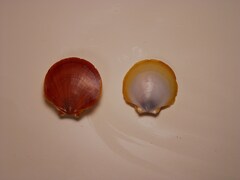
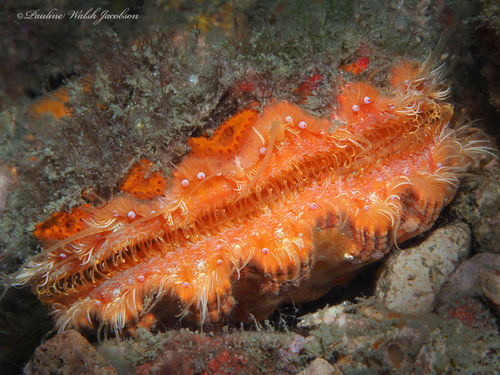
The lion's paw scallop is a species that consists of large scallop shells with ridges and bumps that have a rough texture. The shell is known for its distinct knobs on the ridges. Ranging from red to orange and also purple, the lion's paw scallop ranges in color. The shell's common name is derived from its appearance, the color, and the knobs giving it some visual similarities to the paw of a lion.
As the largest scallop of the Western-Atlantic Ocean, the lion's paw has been commercially fished for human consumption for decades. Indeed, the recent decline of abalone fisheries along with an increase in the shell's value has led to aquaculture specific to the species. Their high growth rate makes them popular; however, not much is known about the requirements to improve farming.
Read more on Wikipedia · Text: Wikipedia, CC BY-SA 4.0
Nodipecten nodosus is een tweekleppigensoort uit de familie Pectinidae. De wetenschappelijke naam werd gepubliceerd in 1758 door Carl Linnaeus in de tiende editie van Systema naturae.
Lees verder op Wikipedia · Tekst: Wikipedia, CC BY-SA 4.0
Classification
| Kingdom | Animalia |
|---|---|
| Phylum | Mollusca |
| Class | Bivalvia |
| Order | Pectinida |
| Family | Pectinidae |
| Genus | Nodipecten |