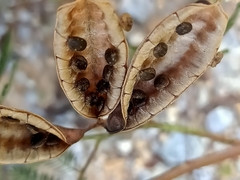
Myroxylon peruiferum
Names
| English | — |
|---|---|
| Dutch | — |
| Spanish | — |
| Chinese | 南美槐 |
| Scientific name | Myroxylon peruiferum L.f. |
About this species
Myroxylon peruiferum, or quina, is a species of tree in the family Fabaceae. It is native to tropical forests of North and South America.
There is some historical documentation that could indicate this tree was the original species used to produce the fever remedy known as Peruvian Bark or Jesuit's Bark, which was synthesized by Jesuit missionaries in the 1600s from their observations of indigenous healers working with local flora. This remedy later became connected to the cinchona tree, also native to Peru, Ecuador and Bolivia, which produces quinine, a natural alkaloid that is effective against malaria. The two trees are not in the same taxonomic order or family.
Some contemporary resources do point to other traditional medicinal uses of Myroxylon peruiferum among communities who are familiar with the species.
Read more on Wikipedia · Text: Wikipedia, CC BY-SA 4.0
Myroxylon peruiferum L.f. es una especie de árbol de la familia Fabaceae, se encuentra de forma natural en Mesoamérica y Suramérica.
Seguir leyendo en Wikipedia · Texto: Wikipedia, CC BY-SA 4.0
香脂豆(学名:Myroxylon peruiferum;西班牙语:quina-quina)是豆科香脂豆属的模式种,间断分布于墨西哥南部至阿根廷北部、巴西南部的拉美地区。
种加词的意思是“产秘鲁香的”,得名于旧时人们对本种的误解。其实秘鲁香是同属的另一种植物秘鲁香树(学名:Myroxylon balsamum var. pereirae)的树脂提取物。
在维基百科上阅读更多 · 文字:维基百科,CC BY-SA 4.0
Classification
| Kingdom | Plantae |
|---|---|
| Phylum | Tracheophyta |
| Class | Magnoliopsida |
| Order | Fabales |
| Family | Fabaceae |
| Genus | Myroxylon |