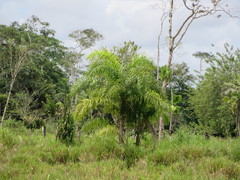
About this species
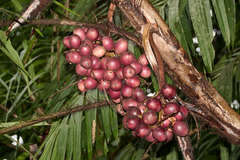
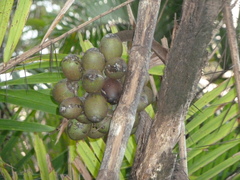
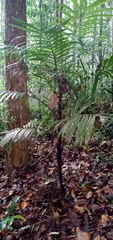
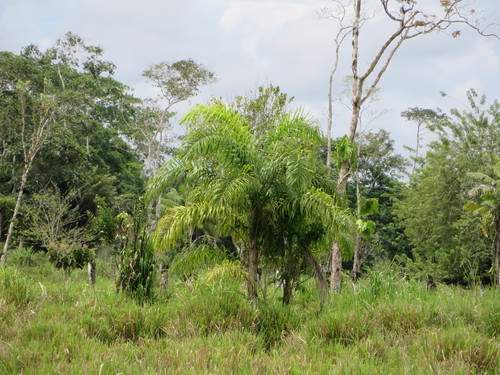
Bactris gasipaes is a species of palm native to the tropical forests of Central and South America. It is well spread in these regions, where it is often cultivated by smallholders in agroforestry systems or more rarely, in monoculture. Common names include peach palm in English, among others used in South American countries. It is a long-lived perennial plant that is productive for 50 to 75 years on average. Its population has an important genetic diversity, leading to numerous fruits, colors, and qualities. The fruits are edible and nutritious but need to be cooked for 30 minutes to five hours. They also benefit many animals in the wild. Peach palms are also cultivated for the heart of palm, and the trunk can make valuable timber.
Read more on Wikipedia · Text: Wikipedia, CC BY-SA 4.0
Bactris gasipaes es una planta de la familia de las arecáceas (de las palmeras). Se le conoce de forma común como pejibaye, pupuña, pipire, pijuayo, pixbae, chontaduro, cachipay, pifá, pibá, chima, chonta o tembe.
Seguir leyendo en Wikipedia · Texto: Wikipedia, CC BY-SA 4.0
桃椰子(学名:Bactris gasipaes)为棕榈科桃果椰子属下的一个种,可提供木材和棕榈心。
在维基百科上阅读更多 · 文字:维基百科,CC BY-SA 4.0
Classification
| Kingdom | Plantae |
|---|---|
| Phylum | Tracheophyta |
| Class | Liliopsida |
| Order | Arecales |
| Family | Arecaceae |
| Genus | Bactris |