About this species
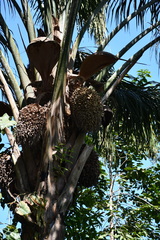
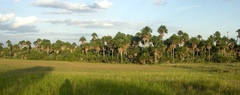
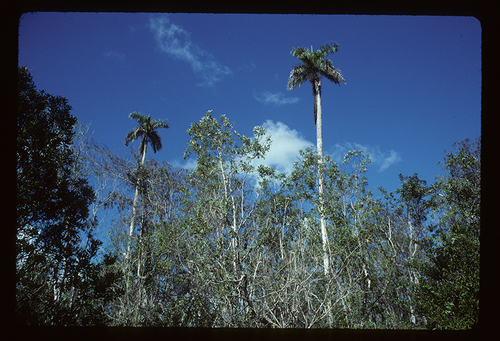
Roystonea regia, commonly known as the royal palm, Cuban royal palm, or Florida royal palm, is a species of palm native to Mexico, the Caribbean, Florida, and parts of Central America. A large and attractive palm, it has been planted throughout the tropics and subtropics as an ornamental tree. Although it is sometimes called R. elata, the conserved name R. regia is now the correct name for the species. The royal palm reaches heights from 15–24 m (50–80 ft) tall. Populations in Cuba and Florida were long seen as separate species, but are now considered a single species.
Widely planted as an ornamental, R. regia is also used for thatch, construction timber, and in some forms of traditional medicine. The fruit is eaten by birds and bats (which disperse the seeds) and fed to livestock. Its flowers are visited by birds and bats, and it serves as a roosting site and food source for a variety of animals. Roystonea regia is the national tree of Cuba, and has a religious role both in Santería and Christianity, where it is used in Palm Sunday observances.
Read more on Wikipedia · Text: Wikipedia, CC BY-SA 4.0
Roystonea regia, conocida como palma real, es una especie de palma cuya altura, elegancia y fácil cultivo la ha convertido en una de los árboles utilizados como ornamental más común en el mundo. Es también el más simbólico de los campos de Cuba, donde es reconocido como árbol nacional. El epíteto específico «regia» viene del latín rēgia y significa "real" (del Rey).
Seguir leyendo en Wikipedia · Texto: Wikipedia, CC BY-SA 4.0
王棕(学名:Roystonea regia),别名大王椰子,棕榈科王棕属植物,原产于古巴、牙买加、巴拿马,是古巴的国树,在古巴受到法律保护,现被广泛种植于热带地区、亚热带地区作观赏之用。
台湾于日治时期1898年引进该树种,目前各地栽培普遍,多做为景观植物及都市里的行道树。由于王棕株型高耸挺拔,是台湾引进的椰子类中最高大而壮观的一种,所以俗名为「大王椰子」。
在维基百科上阅读更多 · 文字:维基百科,CC BY-SA 4.0
Classification
| Kingdom | Plantae |
|---|---|
| Phylum | Tracheophyta |
| Class | Liliopsida |
| Order | Arecales |
| Family | Arecaceae |
| Genus | Roystonea |
In Suriname
Where it has been recorded
- Paramaribo1
Districts with at least one record that has coordinates. Shaded districts have records.